Lectures By Category

December 1, 2026
I describe a modern approach to teaching introductory statistics that leverages logic, theory, and computational methods to engage students in critical quantitative analysis. I explore how integrating open-source software tools into this curriculum enables learners to participate in an interdisciplinary process of knowledge construction: defining terms and propositions and applying statistical concepts to social issues. This approach can strengthen both technical proficiency and critical thinking. I then discuss the structure of a related package, critstats, which informs a community model...

November 17, 2026
One of the major sticking points for departments thinking of coordinating their courses is buy-in from faculty. Will coordination mean that certain people just don’t teach that course? Do people just have to get on board, like it or not? Who has a say, and how? Do some faculty just get to opt out of the whole endeavor? Perhaps most importantly, how do we remain in collegial dialogue when we’ve decided to do this but don’t agree on all aspects...

November 3, 2026
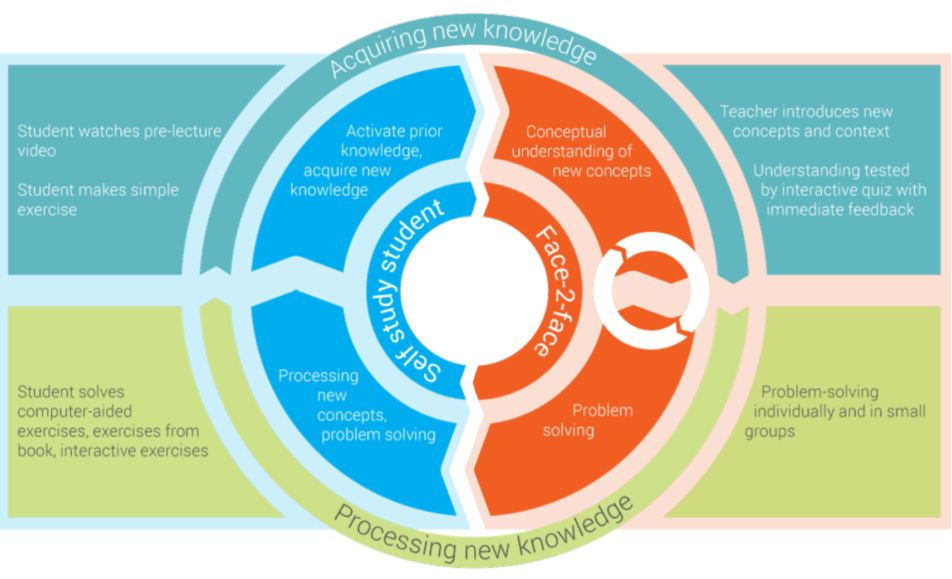
Flipped learning is often presented as an all-or-nothing instructional choice, which can make it feel inaccessible or risky—especially in content-heavy mathematics courses. In this talk, I share my lessons from 10+ years of experience implementing both fully flipped and partially flipped models across a range of mathematics courses at the Colorado School of Mines, including Calculus II, Linear Algebra, Foundations of Advanced Mathematics, and Topology. I discuss how different flipping choices supported student learning, how the model scales to multi-section...

October 20, 2026
We are four years into the generative AI era and we can confidently say: (1) it is the most novel new technology of the last two decades, (2) it has fallen well short of expectations in education. Teacher usage remains lower than predicted. Schools operate identically now as years ago. Generative AI’s greatest contribution to education, so far, is the generation of important questions about the capacities of the technology, the needs of students, and the nature of teaching. We...
October 6, 2026
I will introduce the structure and pedagogy of a new math course at UC Santa Cruz: a modeling-based course in mathematics for the life sciences. Adapted from LS30 at UCLA, the UCSC course uses the dynamics of biological systems as a foundation for teaching relevant concepts from calculus, dynamics, and linear algebra. After a broad introduction to the content and structure of the course, I’ll discuss a pedagogical approach which guides our active learning discussion sections. Some are deliberately high-tech,...
September 22, 2026
After the College of Engineering completed a self-study about math preparation for their programs, our Math Department was invited to create two new courses that are expected to become the core for all first year engineering students. The first is a linear algebra course and the second a condensed calculus course that combines ideas from our current Calc I–Calc II sequence, emphasizes a “numerical” perspective (as opposed to analytic), incorporates more modern engineering applications, and recognizes that over 95% of...
September 8, 2026
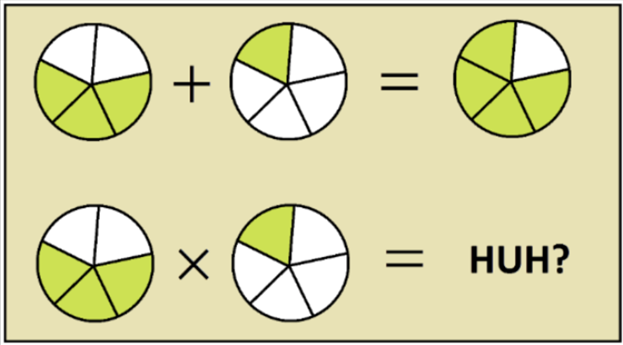
The school curriculum is shaped by a fundamental tension: while much of mathematics is motivated by real-world intuition, the mathematics that emerges ultimately outgrows any single model that inspired it. Fractions sit squarely in this tension, and it is never fully resolved in the curriculum. Students first meet fractions as commands—circle a third of the kittens—and then as concrete parts of a whole—a third of a pie. Fractions are not numbers per se until we place them on the number...

May 5, 2026
We will discuss the development of course-based experiential learning inundergraduate mathematics and data science at Youngstown State throughour participation in the MAA-SIAM Preparing for Industrial Careers inMathematics (PIC Math) program and the Data Mine, in collaboration withPurdue University. The structure of these experiences and some resultswill be presented, along with the challenges of implementing these experiences.
April 21, 2026
In this interactive workshop, participants will reflect on what we think it means to be a mathematician, who is seen or counted as a mathematician, what causes this, and how that affects our communities of learning, teaching, and research in mathematics.
April 7, 2026
The ubiquity and advancements in computing techniques, together with the vast amount of data being collected and processed, have driven statistics and data science (which enable AI) into the spotlight, enabling new waves of innovation in almost every industry and discipline but also creating both bottlenecks in demand and obstacles for access. To broaden this pipeline, we need flexible, low-barrier pathways for students to data science and STEM through better-resourced educators. The NSF-funded SCORE with Data project leverages rapidly growing...
March 10, 2026
The relationship between humans and computers has dramatically changed in our lifetimes, and is in the midst of perhaps the most fundamental shift yet. What is the role of classrooms and educators amidst this swirl of promises and pitfalls of AI? More than ever, our job is to help students think, communicate, and learn about the power of their minds. In this session, we’ll look at the ways that we can help students use technology to think with them, not for them....
February 24, 2026
The Mason Experimental Geometry lab is the cornerstone of the mathematics outreach and undergraduate research efforts at George Mason University. While the outreach team engages up to 1000 students per semester in highly interactive small-group activities, multiple research teams give both beginning and advanced students a chance to contribute to research under the guidance of a graduate student and faculty mentor. In this talk, I will focus on the structure and benefits of the lab, as well as variations onthe...
September 12, 2023
In the preface to his textbook Abstract Algebra, Israel Herstein states that “there is little purpose served in studying some abstract algebra object without seeing some non-trivial consequences of the study.” Sharing this sentiment, I have created a variety of projects to supplement my abstract algebra courses. The projects are designed to build intuition and reveal the relevance of the subject. I will present a sampling of my projects, along with the philosophy behind them, how I implement them, and...

September 24, 2024
AI-powered activities in STEM education offer a way to blend well-established active learning techniques with personalized instruction. These AI-supported lessons adapt to each student’s needs, providing an alternative that can improve engagement, motivation, and learning outcomes. This presentation will cover the design and implementation of these activities and present insights from a study comparing AI-driven instruction with in-class active learning methods.

December 5, 2023
Many of today’s math majors will be tomorrow’s AI engineers. How can we empower our students to succeed in a world pervaded by AI, and to shape that world? Tech progress may be inevitable, but it isalso path-dependent: The technologies we pursue as a civilization are ultimately a function of choices made by individual human beings. The future of AI holds great promise and, many believe, great peril. What is the best way to encourage our students – especially those...

October 7, 2025
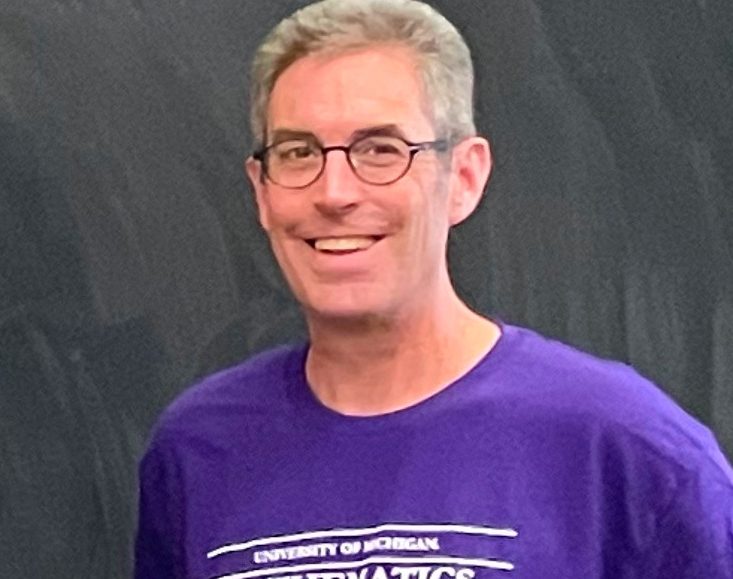
Mathematical reasoning and proof writing are essential in science and engineering programs, butmany students find them challenging. I’ll discuss the redesign of a first-year linear algebra course for Applied Mathematics students aimed at explicitly teaching proof writing alongside course content. Rather than treating proof instruction separately, all activities and assessments were aligned with this goal. The course uses interactive videos, quizzes, and classroom activities, plus a weekly low-stakes “proof of the week” assignment focused on effort, with feedback through peer...
September 9, 2025
Mathematics courses have traditionally been characterized by impersonal instruction and assessment centered on timed, high-stakes exams; as a result, they have traditionally failed to promote the success of all students taking the courses. In this talk we describe a course redesign of our introductory courses to focus instruction on the success of all students and to restructure assessment to reduce the weight of timed, high-stakes exams by adding repeatable mastery assessment. Initial evaluation of the impact of these changes suggests...

February 20, 2024
A diagnostic tool that aims to capture student voice at scale, using text analytics and data visualization. Diagnostic tools can be used to measure student mastery of prerequisite skills and preparedness for a given course. For a large-enrollment course serving students with a variety of backgrounds, skillsets, andmotivations, can we use this type of tool to generate action-oriented insights and inform teaching? In this project, we propose a framework for a diagnostic tool designed to provide nuanced information about a...
October 24, 2023
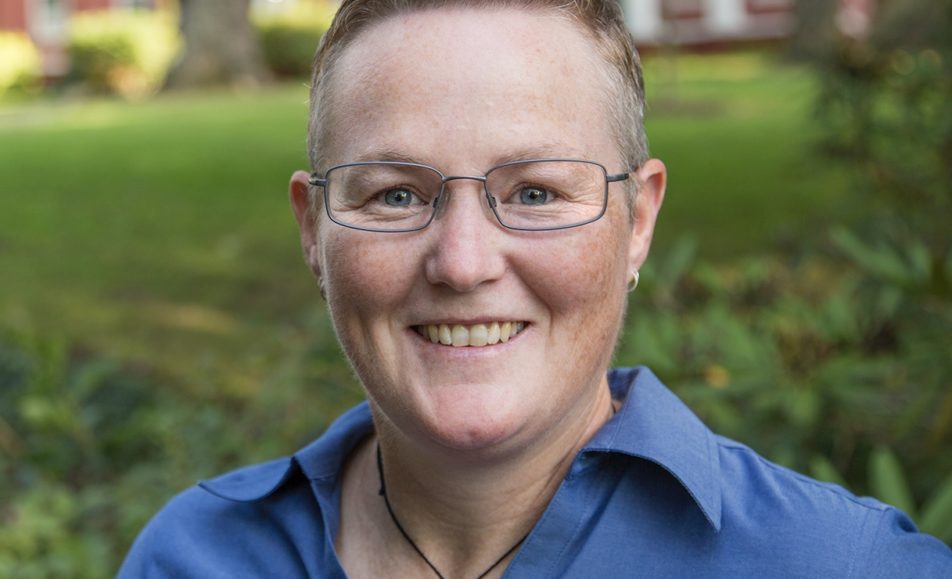
Over the past few years, the use of alternative grading techniques, such as mastery-based testing, specifications grading, and ungrading, has become more prevalent in undergraduate mathematics courses and, more generally, across higher education. In this talk, I will describe my own grading journey, the efforts of myself and others to promote the use of alternative grading, and lessons learned about how to effectively encourage widespread adoption of alternative grading approaches.
September 26, 2023
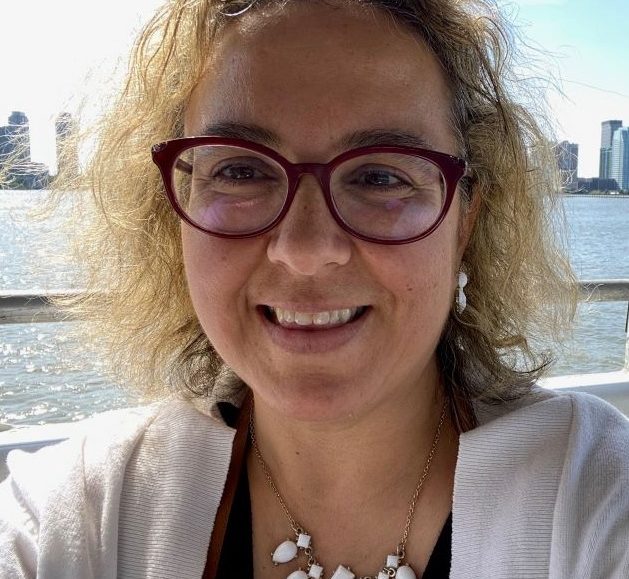
There is a large body of research on the importance of explicitly teaching students about evidence-driven strategies for effective learning. Incorporating instructional strategies grounded in cognitive science can enable educators and learners to prosper in their academic goals. As educators, specifically during an era of pandemic-induced learning loss and the loss of motivation and interest in higher education, we strive to explore novel methods to transform our teaching practices. To reduce the gap between research on learning and the practice...

February 7, 2023
The role of assessment in education is wide-ranging, and how we choose to assess our students will impact what they do and how they learn. Can we design assessments that serve as both accurate measures of understanding and valuable learning activities that aid knowledge retention? Can we make them accessible to a diverse group of students each with their own unique needs? In this talk, I will describe several examples of innovative assessments used in Math classes at Waterloo, how...

November 22, 2022
Mathematics education often focuses on skills—like memorizing procedures, factoring a quadratic, integrating expressions, or proving something by induction. Skills are important to learn, but a great mathematics education should also be developing mathematical virtues—such as persistence, curiosity, creativity, and an appreciation of mathematical beauty. Virtues are just as important, if not more important, than skills and yet they seem to only show up implicitly in our assessments. In this talk, I’d like to start a conversation about assessing virtues: what...
November 8, 2022
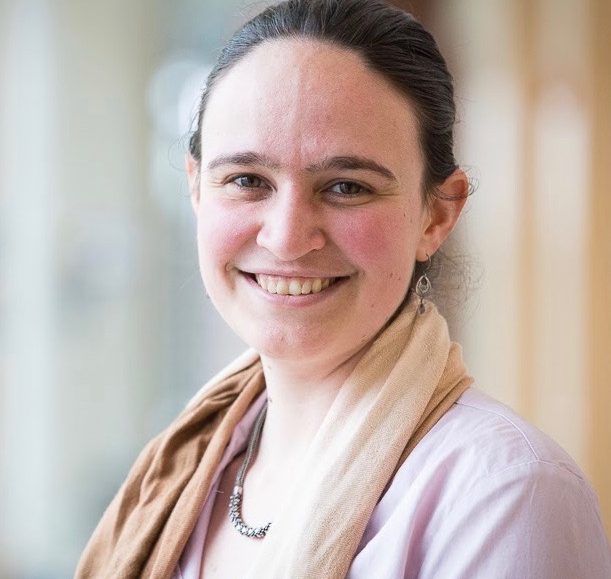
Standards-based grading is an evaluation method that reduces student anxiety and motivates learning, while maintaining rigorous standards. In this talk, I will describe how I implemented this new system in a linear algebra class (~400 students). This will include the motivations for the change, the logistical details of how the change was implemented, results and feedback from students, how this will inform my teaching going forward. I will also discuss variations on this system and how it could be incorporated...

September 14, 2021
During remote instruction necessitated by the pandemic, many instructors tried to adapt their in-person, timed exams to a remote setting. As we know, this caused a host of issues. In this presentation, we will discuss an assessment technique that I developed to avoid many of the issues referred to above. We will consider an intro calculus assessment that: can be graded in same or less time as traditional written tests; evolves with semester content and student understanding; can be used...
March 2, 2021
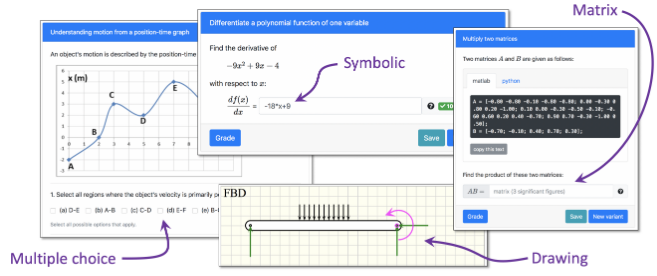
PrairieLearn is a flexible, open-source platform for writing web-based questions that is in broad use for both homework and exams. We will show how PrairieLearn makes it easy to write questions that can randomize themselves, allowing students to practice repeatedly on different variants of a question, and to auto-grade so that students receive immediate feedback. In comparison to other question-asking platforms, PrairieLearn is highly extensible and permits instructors to develop and share new question components using standard languages such as...

April 27, 2021
We will give an introduction to the philosophy behind mastery grading and share our experiences with this mode of grading across a number of STEM courses (Calculus and Linear Algebra) as well as its use in a large scale introductory General Education Statistics Course, where we are using mastery grading at scale. We have experimented with a number of different implementations and will share what we have learned in the process, in particular how to use this system in a...
February 2, 2021
This presentation will take the form of a brief tour of three parallel threads in recent work updating my freshman-level discrete mathematics course materials: (1) Explicit connections to secondary school content leverage common student experiences, promote communication within the class, and better serve majors pursuing teaching certification. (2) Computer-based interactions (retooled in HTML/JavaScript to be tablet friendly) provide support for an inquiry-based approach to students construct their own understanding of mathematical proof. (3) An extensive MyOpenMath library for discrete mathematics...
October 22, 2024
Research links strong metacognitive skills with increased academic and math performance; however, incorporating opportunities for students to learn and practice metacognitive skills within our mathematics courses can be challenging. In this talk, we will explore the literature on metacognition, with a focus on what we as instructors can do to build metacognition into our courses. I will share my own experience building a Weekly Learning Strategy program into a large multi-section calculus course at Yale, and reflect on successes, challenges,...
February 20, 2024
A diagnostic tool that aims to capture student voice at scale, using text analytics and data visualization. Diagnostic tools can be used to measure student mastery of prerequisite skills and preparedness for a given course. For a large-enrollment course serving students with a variety of backgrounds, skillsets, andmotivations, can we use this type of tool to generate action-oriented insights and inform teaching? In this project, we propose a framework for a diagnostic tool designed to provide nuanced information about a...

September 27, 2022
This is the story, or at least my version of it, of how the Applied Math faculty tried to update the calculus curriculum in our Engineering School to fit departments’ requirements and our desire for course innovation, after decades of stagnation. We designed three different tracks to map all entering students, with track selection based only on their math background. Each track was built on active learning pedagogies with in-class teaching assistants. An online “Math Lab” library [this was before...

April 5, 2022
We will describe efforts at Oregon State University to help students master the use of partial derivatives in physical and geometric contexts, in both mathematics and physics courses. Successfully navigating the language differences between disciplines requires a rich concept image of partial derivatives. Several examples will be presented, along with some of the methods and tools developed to address them, as well as some of the underlying education research.
March 22, 2022
Efforts of integrating active learning into introductory, Precalculus and Calculus courses started Fall 2014 at the University of Illinois at Chicago (UIC). Pass rates improved, student retention increased, and the performance gap between underrepresented and white students decreased. The active learning program reached a peak in 2019 with new active learning classrooms, a robust Learning Assistant program and a library of active learning materials for instructors. Then we were faced with new challenges with the global pandemic, challenges on access,...

March 8, 2022
Many instructors have faced the challenge of adapting classroom practices from one setting to another. Like houseplants, some approaches that thrive in one setting seem to mysteriously wither in others. In this talk, I will focus on the effect of scale in (mostly) my own experience teaching single variable integral calculus. In the pre-pandemic era, this includes a five-year run teaching an uncoordinated active calculus section of 50-60 students which eventually produced reasonable successes building student buy-in and promoting social...

October 26, 2021
Manipulative Calculus is a project based at Harvard University focused on developing active learning lessons in calculus courses centered around digitally fabricated 3D models. In these lessons, we put digitally fabricated models into students’ hands, and they are asked to make geometric sense of the concepts learned in the course through problems requiring them to handle, discuss, and sketch on the models. At this point, the lessons and models have been in use for several semesters by dozens of instructors...
September 14, 2021
During remote instruction necessitated by the pandemic, many instructors tried to adapt their in-person, timed exams to a remote setting. As we know, this caused a host of issues. In this presentation, we will discuss an assessment technique that I developed to avoid many of the issues referred to above. We will consider an intro calculus assessment that: can be graded in same or less time as traditional written tests; evolves with semester content and student understanding; can be used...

December 1, 2020
At the University of Toronto Mississauga we offer Calculus for Life Science courses, taken by more than 600 students each year. The course is taught in large lecture sections with about 150 students in each. In 2018 we redesigned and converted the course into an active-learning course. Students prepare in advance, and then participate in in-class polling and group activities, which are accompanied by discussions and short lectures. This approach turned out to be more effective than the traditional lecture-based...
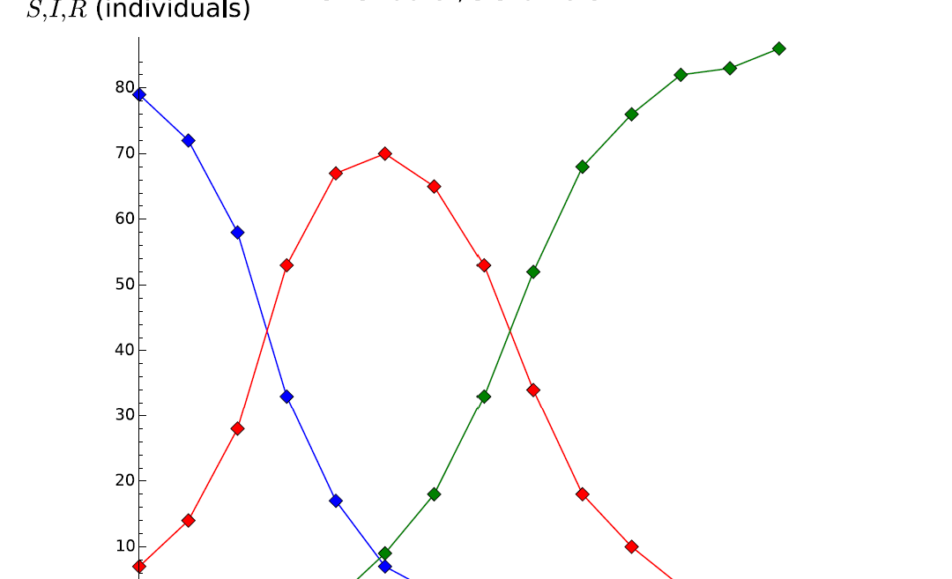
April 14, 2020
Now is probably as good a time as any, unfortunately, to argue for a first-semester Calculus course that begins with the S-I-R, or Susceptible-Infected-Recovered, dynamical system from epidemiology. I’ll describe how I use S-I-R to kick-start a course, that, eventually, gets to all of the usual Calc I stuff, and is richly satisfying to math geeks (like me) while still appealing to students who are perhaps less geeky, or geeky in different directions. This course is based on the brilliantly...

April 30, 2019
There is a long history of engaged teaching in the Mathematics Department at Cornell. We will give an overview of two significant projects focused on Calculus 1: the Good Questions project and the Active Learning Initiative. We will give some of our preliminary findings about what has an impact on student learning. We will also discuss implications of our work for TA and instructor training.

October 2, 2018
Several recent ESME presentations have focused on active or inquiry-based learning (such as those by Angie Hodge, Darryl Yong, Robin Pemantle, David Pengelley).Indeed, it is well-established that active learning offers, on average, significant benefits to students.At the same time, implementing active pedagogy effectively is challenging on several levels, including achieving student buy-in, developing engaging investigations for students, and addressing what Stan Yoshinobu and Matthew Jones have called “the coverage issue.” In this seminar, I will share some samples from my...

September 23, 2025
Fifteen years ago, math majors told my colleague Jeff Humpherys and me, “We majored in math because we like it, but we know it won’t get us a job unless we want to teach.” This inspired us to create the applied and computational mathematics (ACME) program at BYU, which combines deep, beautiful mathematics with practical skills in demand by employers. Since launching twelve years ago, our number of majors has nearly doubled, with ACME students now making up two-thirds of...

October 11, 2022
Embodied cognition is a philosophy that claims that learning is body-based. One might ask how that has anything to do with teaching and learning mathematics. In this talk, I will illustrate ways in which this lens can facilitate learning especially for students whose second language is English. I argue that most faculty probably already adopt aspects of embodied cognition into their courses and my hope is to help make faculty more aware of how they do this. Please bring your...

December 7, 2021
Mathematics rarely happens in isolation, and is also more fun when done with other people. But effective collaboration can be challenging — the mathematical sciences alone have several notorious collaborative fallings out that have damaged both the relationships involved and the associated mathematical progress. Fortunately, collaboration is a skill that can be developed and practiced. This talk will present research from colleagues in the social sciences that can help us as mathematicians to create and maintain positive collaborative relationships. We...
November 27, 2018
In this seminar, we’ll discuss concepts that can guide the teaching of mathematical communication: writing to learn vs. learning to write; Anne Beaufort’s model of the prerequisites to effective disciplinary communication; the view of genres and genre systems as rhetorical actions; and Lave and Wenger’s observation that limited peripheral participation can be an effective means for entering a community of practice. Periodic questions will guide participants to consider how these concepts could be applied in their contexts, and examples of...

In this talk, John and Sarah will discuss how fostering student engagement is a central theme of the mathematics curriculum at Olin College of Engineering. From day one, interdisciplinary projects and collaborative teaming experiences help cultivate student ownership in learning. Courses use increasing levels of autonomy in various ways to help keep motivation (and morale!) high. While a major goal of our curriculum is to develop students’ project management skills alongside their quantitative analysis skills, we believe that nurturing an...
September 26, 2023
There is a large body of research on the importance of explicitly teaching students about evidence-driven strategies for effective learning. Incorporating instructional strategies grounded in cognitive science can enable educators and learners to prosper in their academic goals. As educators, specifically during an era of pandemic-induced learning loss and the loss of motivation and interest in higher education, we strive to explore novel methods to transform our teaching practices. To reduce the gap between research on learning and the practice...
November 19, 2019
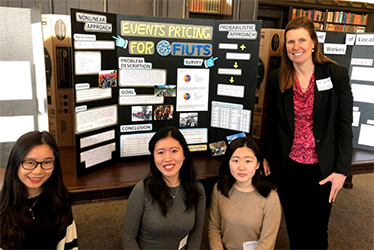
Discrete Mathematical Modeling is used everywhere in business and sports these days so it’s an exciting topic to teach and learn. This lecture will describe our approach to incorporating decision problems from nonprofit organizations, small businesses, and groups on campus into our classes through student projects. We have found that in addition to helping our community partners, our students are highly motivated by the material related to their projects. Specific examples and resources will be discussed.
April 29, 2025
Project EMBER is a national initiative that aims to ensure every higher education math student succeeds in introductory mathematics aligned with their interests – starting at the research institutions that influence all other sectors of the higher education system. Project EMBER seeks to remove mathematics as a barrier for students by empowering Teaching Focused Faculty and equipping them with the tools and resources needed to implement research-backed innovations at scale across a robust network of vertically-integrated teams of teaching-focused faculty,...

March 4, 2025
As interest in STEM fields has grown over the last few decades, enrollment in introductory STEM courses has substantially increased, resulting in either larger sections of these classes or more of them. With increased enrollment in these courses, ensuring consistency and quality across multiple sections has become a widespread challenge. Course coordination has been widely implemented as a structured approach to address this issue. In this talk, we will discuss the literature surrounding course coordination, how it works, and what...
September 9, 2025
Mathematics courses have traditionally been characterized by impersonal instruction and assessment centered on timed, high-stakes exams; as a result, they have traditionally failed to promote the success of all students taking the courses. In this talk we describe a course redesign of our introductory courses to focus instruction on the success of all students and to restructure assessment to reduce the weight of timed, high-stakes exams by adding repeatable mastery assessment. Initial evaluation of the impact of these changes suggests...
September 27, 2022
This is the story, or at least my version of it, of how the Applied Math faculty tried to update the calculus curriculum in our Engineering School to fit departments’ requirements and our desire for course innovation, after decades of stagnation. We designed three different tracks to map all entering students, with track selection based only on their math background. Each track was built on active learning pedagogies with in-class teaching assistants. An online “Math Lab” library [this was before...

February 19, 2019
I will report on a still on-going project to develop and improve the largest linear algebra course offered by the Department of Mathematics at Illinois. This course is a (non-proof based) first course in linear algebra taken by more than 1600 non-math majors each year (the majority of these students are sophomores and juniors whose major is in engineering). The two main goals of this redesign are to increase the active learning component and to identify applications and develop activities...

December 5, 2017
This is a math-centric history of the active learning initiatives at Penn, starting in 2013 with our involvement in a project funded by the AAU.
November 21, 2017
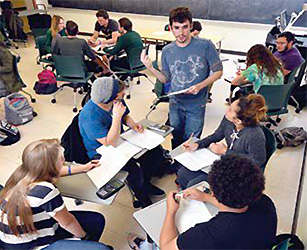
Over the last three years I have led a transformation of the Survey of Calculus course at Michigan State University. This applied calculus course serves over 3600 students per year. I will discuss the new course design, as well as the challenges in transforming large courses. This course redesign is part of a push by the MSU math department to improve introductory math courses, as well as a broader effort across the university to improve STEM gateway classes. I will...
April 16, 2024
In mathematics, rigor is both a practice and a value. However, the term isn’t exclusive to our field. How in the growing field of data science can we define rigor? What are the implications for the classroom? In what ways are our definitions of rigor influenced by the discipline where we practice it? Can we find analogies between definitions of rigor in pure and applied arenas? In what ways can we expect rigor from developers and practitioners of data science,...
March 19, 2024
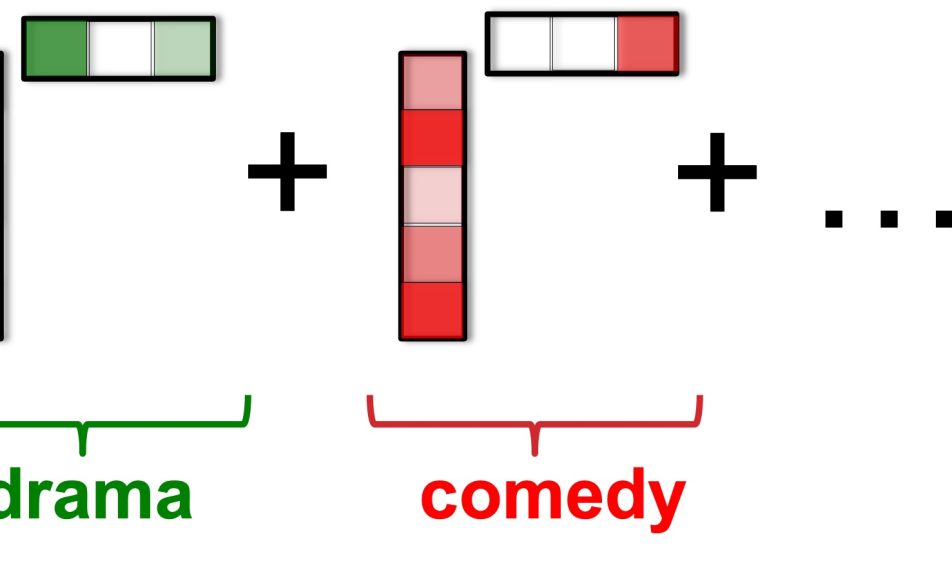
In Fall 2020, we piloted a new version of introductory linear algebra at MIT (and have been teaching it ever since). Our goal was to emphasize modeling and computation, and not just problems that have a recipe-driven solution. For example, when you come across a problem in another domain, can you recognize when it is just linear algebra in disguise? Such examples help students better appreciate the expressive power of the abstractions they are learning. We also integrate hands-on projects...

February 4, 2020
Introductory ordinary differential equations is the most challenging sophomore level mathematics course for most science, engineering, and mathematics majors. Over the past decade it has evolved into a hybrid course involving large lectures, group work in smaller discussion sections, team-based projects, and on-line material in pdf and video format. The materials developed have also been used by a local community college and by a local high school AP class. It incorporates both formative and summative evaluation. We will describe the...
May 1, 2018
Undergraduate mathematics education today faces a number of challenges and difficulties. One way to address these challenges is to build on promising theoretical advances and instructional approaches, even those not originally developed with undergraduate mathematics in mind. The Inquiry Oriented Differential Equations Project (IODE) is one such effort, which can serve as model for other undergraduate course innovations. In this presentation I describe central characteristics of the IODE approach, report on results of a comparison study, and provide an overview...
February 2, 2021
This presentation will take the form of a brief tour of three parallel threads in recent work updating my freshman-level discrete mathematics course materials: (1) Explicit connections to secondary school content leverage common student experiences, promote communication within the class, and better serve majors pursuing teaching certification. (2) Computer-based interactions (retooled in HTML/JavaScript to be tablet friendly) provide support for an inquiry-based approach to students construct their own understanding of mathematical proof. (3) An extensive MyOpenMath library for discrete mathematics...
April 29, 2025
Project EMBER is a national initiative that aims to ensure every higher education math student succeeds in introductory mathematics aligned with their interests – starting at the research institutions that influence all other sectors of the higher education system. Project EMBER seeks to remove mathematics as a barrier for students by empowering Teaching Focused Faculty and equipping them with the tools and resources needed to implement research-backed innovations at scale across a robust network of vertically-integrated teams of teaching-focused faculty,...

In 2014, Teaching TRIOS at Middle Tennessee State University introduced an innovative peer observation model for STEM educators. TRIOS, based on being Time-sensitive, Reciprocal, Inclusive, Operative, and Strength-Based, transforms observation from evaluative to reflective, focusing on faculty strengths to drive change. In this OLSUME talk, I’ll discuss a decade’s worth of lessons from practice, theory, and empirical research. Practically, I’ll detail structuring TRIOS groups in STEM departments, offering guidance for adopting this strategy. Theoretically, I’ll discuss our NSF-funded ACT-STEM project,...
February 6, 2024
This talk focuses on practical strategies that college mathematics instructors can use to promote anequitable and engaging classroom environment. I illustrate these strategies using a case study includingvideo clips from a professional development program that I have been running for math faculty members over the past five years. In addition to offering specific strategies, I also discuss a learning process that faculty members can engage in to help them better uptake the strategies in an effective way. I draw heavily...
February 18, 2020
Mathematics is a human endeavor. In other words, mathematics is done, taught, discovered and learned by people. All people have various identifying characteristics and experiences that affect how they interact with other people and how people interact with them. The identities of the people who are perceived as belonging to the mathematics community is important. Data will be presented about the diversity and demographics of the mathematics community in the United States, followed by a discussion of the significance and...

December 11, 2018
Increasing the use of inclusive teaching strategies starts with building awareness in departments and among instructors. In this presentation we will describe a low-cost effort to create a community of instructors with interest in and knowledge of how mathematics classrooms may be inclusive (or not), whose members have thought about and developed a toolkit of teaching strategies they can implement in their own classrooms. Our group met six times over the course of a semester, with two additional meetings in...
September 18, 2018
Underrepresented minority students are more likely to drop out of college. Minority students and women are more likely to leak from the STEM pipeline at every stage from middle school on. Why do we need to address these issue? What can we do in our classrooms, departments, and institutions to ensure that everyone has an opportunity to succeed? When faced with a challenging situation, what will you do to make our world a more just place? In this session, we’ll...

February 20, 2018
Active learning has many documented benefits both for students and instructors. Moreover, there is increasing evidence that it disproportionately benefits women, students of color, and students who previously denied the same learning opportunities as others. However, the empirical evidence for this disproportionate benefit doesn’t explain why it happens, nor does it guarantee that all students will benefit from active learning. In fact, my own experience with active learning is that it is difficult to do well and sometimes it can...

October 13, 2020
Creating accessible materials (handouts, exams, lecture notes, and textbooks) can be a challenge in the best of circumstances, but is even more so when they contain mathematics. Paradoxically, documents in electronic forms are often done poorly, when they are really the easiest to get right. Our experience with this topic comes solely from the design and implementation of PreTeXt, which is a markup language and publishing system which converts a single source document into a variety of output formats: print,...
October 25, 2022
Although education research has many implications for improving student outcomes in mathematics, more work is needed to successfully and sustainably translate research findings into practice. This interactive presentation will focus on what we know as a field about effective and efficient ways to improve student outcomes in mathematics, and what that could or should mean for mathematics departments. Improving student outcomes sustainably involves not just making individual, isolated changes, but whole departments investing in addressing complex systems. This presentation will...

May 26, 2020
I will describe the development of a new classroom observation protocol, FILL+, which generates a timeline showing the type of activity taking place at each second (“lecturer talk”, “student question”, etc). This provides much finer detail about classroom practices than other protocols (such as COPUS, which notes activities taking place in 2-minute intervals). The timeline can be summarised quantitatively, for instance by computing the proportion of time spent on lecturer talk compared with other activities, or counting how often lecturers...
October 24, 2023
Over the past few years, the use of alternative grading techniques, such as mastery-based testing, specifications grading, and ungrading, has become more prevalent in undergraduate mathematics courses and, more generally, across higher education. In this talk, I will describe my own grading journey, the efforts of myself and others to promote the use of alternative grading, and lessons learned about how to effectively encourage widespread adoption of alternative grading approaches.

November 5, 2024
Bridge programs provide crucial academic and mentorship resources to help students transition smoothly into PhD programs. In this panel discussion, Creating Pathways to a Math PhD, leaders from various bridge programs will share the pivotal role these initiatives play in preparing students for graduate studies in mathematics. Program representatives will briefly share insights into their curricula, student outcomes, and support for underrepresented or nontraditional students. A moderated discussion will follow, exploring the broader impact of these programs on graduate education...
December 7, 2021
Mathematics rarely happens in isolation, and is also more fun when done with other people. But effective collaboration can be challenging — the mathematical sciences alone have several notorious collaborative fallings out that have damaged both the relationships involved and the associated mathematical progress. Fortunately, collaboration is a skill that can be developed and practiced. This talk will present research from colleagues in the social sciences that can help us as mathematicians to create and maintain positive collaborative relationships. We...
May 14, 2019
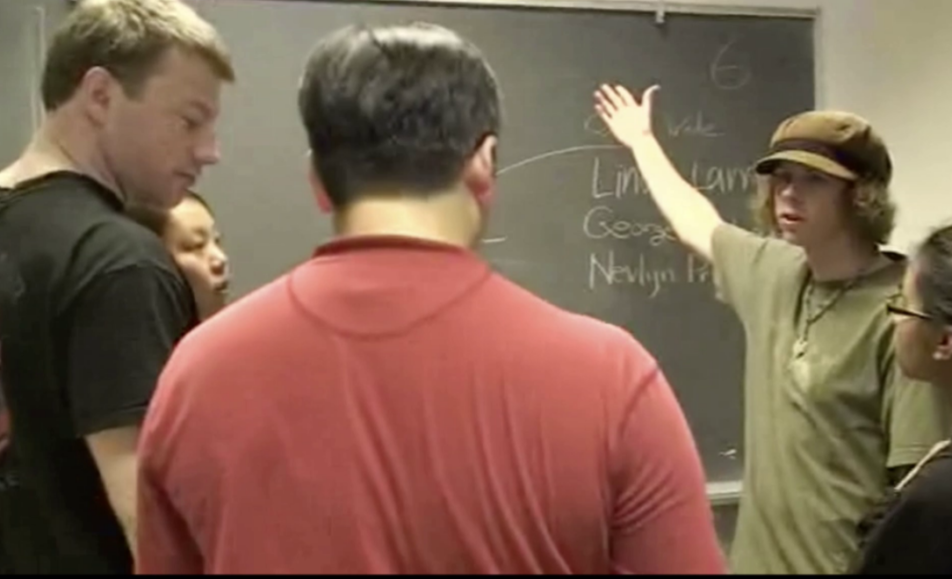
You are invited to contact Eric Hsu if you would like access to material supporting the teaching approach described here. In this discussion, we will address common unspoken beliefs of math teachers that hold us back from improving our practice, specific group work facilitation strategies for college classes of up to 50 students, and the creation of group-worthy tasks.

October 21, 2025
Abstract: The members of the Inquiry-Oriented Linear Algebra (IOLA) design team have recently completed their second round of large-scale, NSF-funded instructional task design. These research-based materials promote a student-centered approach to the teaching and learning of introductory linear algebra at the university level. In this talk, I will discuss the current state of the materials, including a discussion of the underlying research design theory and the research team’s methods. I will provide a tour of the IOLA website and demonstrate some...

February 18, 2025
How do we approach students who do not see mathematics as useful? Those who are afraid of it? This talk will describe how we can engage them in quantitative thinking by “teaching backward”. Using examples, I will show how starting with stories, we can often get students to grab onto mathematics. They may surprise themselves by how far they get.
February 4, 2025
This session will explore how the University of Michigan incorporates Inquiry-Based Learning (IBL) into graduate-level courses. Jenny Wilson and David Speyer will discuss their approach to framing and facilitating IBL instruction for graduate students, offering insights into how these methods enhance engagement and deepen understanding.
February 16, 2021
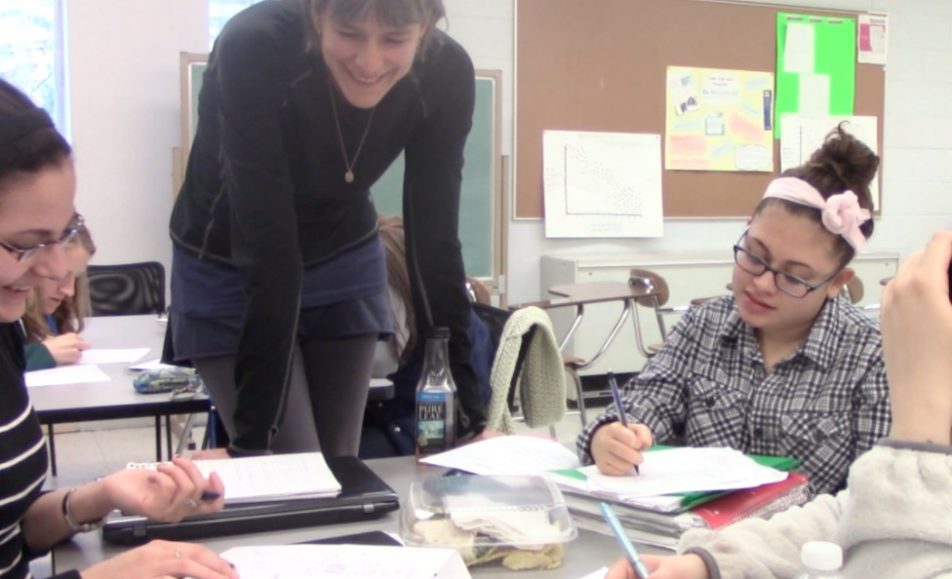
In this very active session, participants will experience doing a mathematical activity in a remote synchronous setting. They will then use this experience to reflect on learning and teaching, especially in the current remote setting. Finally we will think about how we can use communities of practice like the Communities for Mathematics Inquiry in Teaching, COMMITs, to support each other in becoming even better educators.
April 2, 2019
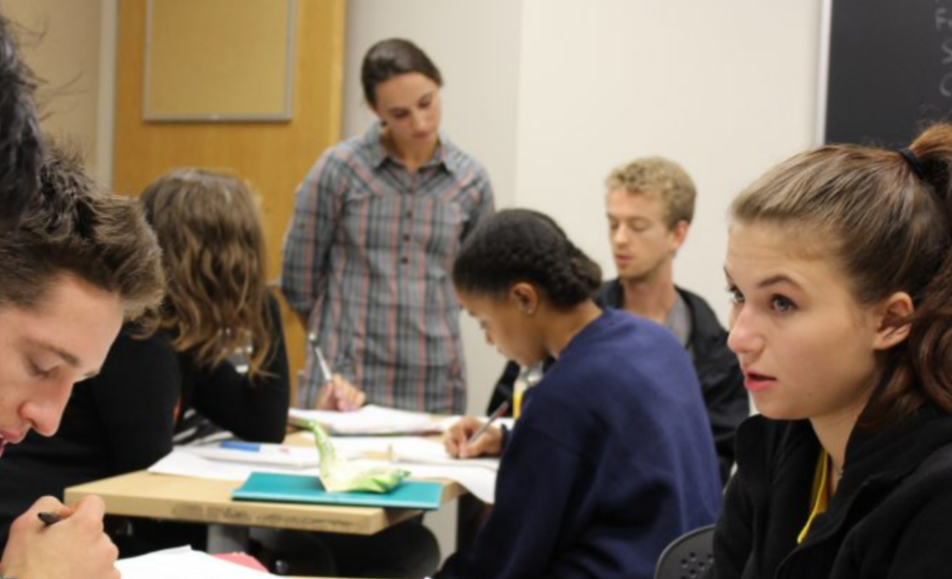
The IBL Center at University of Michigan is happy to share their IBL course materials with other instructors worldwide. Please email spatzier@umich.edu. In IBL, students learn through guided exploration with the help of experienced instructors. We engage the students and emphasize discovery, analysis, and investigation to deepen their understanding of the material and its applications. Students solve problems, conjecture, experiment, explore and create. These practices have been strongly supported by the CBMS, MAA, and the NRC. I will discuss inquiry...

February 5, 2019
In this workshop/lecture, we’ll explore ways to structure in-class learning activities: how we might lead an IBL activity, or even an entire IBL course. In addition, we’ll learn how the speaker wound up using IBL to teach a class on isomorphisms of quotient groups in a bagel shop. Interactive Engagement in the classroom can take many forms: Inquiry Based Learning, Think-Pair-Share, Flipped classrooms, and more. And beyond being a totally trendy pedagogical innovation, interactive engagement increasingly has demonstrated improved outcomes...

May 15, 2018
Calculus is often said to be the most difficult class in which to implement inquiry-based learning (IBL) techniques. There are questions of class coverage, larger class sizes, and the mathematical maturity of the students taking calculus. Instead, IBL is historically known to be used in upper-division mathematics courses where students are responsible for generating proofs with little to no help from the professor. In this seminar, I will discuss ways to successfully incorporate IBL into the calculus classroom. A variety...
May 1, 2018
Undergraduate mathematics education today faces a number of challenges and difficulties. One way to address these challenges is to build on promising theoretical advances and instructional approaches, even those not originally developed with undergraduate mathematics in mind. The Inquiry Oriented Differential Equations Project (IODE) is one such effort, which can serve as model for other undergraduate course innovations. In this presentation I describe central characteristics of the IODE approach, report on results of a comparison study, and provide an overview...
October 30, 2018
Despite the important roles they play in undergraduate mathematics education, little attention has been focused on the preparation of graduate teaching assistants (TAs). In addition, faculty who wish to start or enhance a professional development program for TAs may find it challenging to locate instructional materials. The purpose of CoMInDS is to create an infrastructure, housed and supported by the MAA, to enhance the mathematics community’s ability to provide high quality, teaching-related professional development to graduate students. We will provide...
November 7, 2017
The MAA Instructional Practices Guide is a companion guide to the 2015 CUPM Guide to Undergraduate Programs in the Mathematical Sciences. The IP Guide focuses on three core practices: Classroom Practices, Assessment Practices, and Course Design Practices. The guide is in draft form, preparing for release in 2018. This seminar will describe the principles the author team used in creating the guide, will provide an overview of the contents of the guide, and will provide an opportunity to discuss some...
May 12, 2020
Only recently has there been research on what sort of mathematics training is actually useful to teachers. I will begin with brief survey of this research, for both elementary and high school teaching. I will discuss some recent results on how policy tends to be more consistent with these findings at the elementary level than at the high school level, and why this may be. I will conclude with some open questions about the mathematical preparation of high school teachers,...
October 21, 2025
Abstract: The members of the Inquiry-Oriented Linear Algebra (IOLA) design team have recently completed their second round of large-scale, NSF-funded instructional task design. These research-based materials promote a student-centered approach to the teaching and learning of introductory linear algebra at the university level. In this talk, I will discuss the current state of the materials, including a discussion of the underlying research design theory and the research team’s methods. I will provide a tour of the IOLA website and demonstrate some...
October 7, 2025
Mathematical reasoning and proof writing are essential in science and engineering programs, butmany students find them challenging. I’ll discuss the redesign of a first-year linear algebra course for Applied Mathematics students aimed at explicitly teaching proof writing alongside course content. Rather than treating proof instruction separately, all activities and assessments were aligned with this goal. The course uses interactive videos, quizzes, and classroom activities, plus a weekly low-stakes “proof of the week” assignment focused on effort, with feedback through peer...

April 15, 2025
Linear Algebra is often an obstacle for students whose only prior experience is with calculus. I discuss a textbook I’m writing that takes a very different approach from existing textbooks. The target audience is ordinary students, not honors students. A key organizing principle is for the course to have a narrative arc, with near term and longer-term goals pointing the way forward at each stage. The arc for the first part of the course focuses on diagonalization, first for the...
March 19, 2024
In Fall 2020, we piloted a new version of introductory linear algebra at MIT (and have been teaching it ever since). Our goal was to emphasize modeling and computation, and not just problems that have a recipe-driven solution. For example, when you come across a problem in another domain, can you recognize when it is just linear algebra in disguise? Such examples help students better appreciate the expressive power of the abstractions they are learning. We also integrate hands-on projects...

November 7, 2023
We discuss some initiatives at Rutgers math department that aim to bring active learning into higherlevel proof-based math courses. One such established program is active learning in our Intro Math Reasoning course, in collaboration with the Rutgers Learning Centers. Another recent initiative is an NSF funded grant to explore the possibilities of introducing active learning into 300 level proof based Linear Algebra.
November 8, 2022
Standards-based grading is an evaluation method that reduces student anxiety and motivates learning, while maintaining rigorous standards. In this talk, I will describe how I implemented this new system in a linear algebra class (~400 students). This will include the motivations for the change, the logistical details of how the change was implemented, results and feedback from students, how this will inform my teaching going forward. I will also discuss variations on this system and how it could be incorporated...
September 13, 2022
The Inquiry-Oriented Linear Algebra (IOLA) project promotes a research-based, student-centered approach to the teaching and learning of introductory linear algebra at the university level. Based on the instructional design theory of Realistic Mathematics Education, the IOLA curricular materials build from a set of experientially real tasks that allow for active student engagement in the guided reinvention of key mathematical ideas through student and instructor inquiry. The online instructional support materials include resources such as rationales for task design, implementation suggestions,...
November 9, 2021
With the surge of interest in Data Science among undergraduates across the university, linear algebra is fast becoming one of the most sought after math courses, along with probability and optimization Are pure math departments ready for this? At the University of Washington, the introductory linear algebra course caters to over 2500 students each year. It used to be taught by a wide variety of instructors, in a wide variety of ways. In the last five years we undertook a...
September 28, 2021
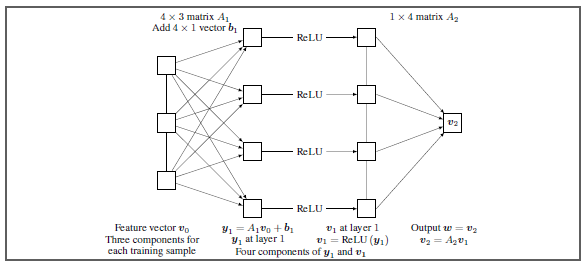
“Deep learning” is shorthand for the creation of a function F(x, v) so that the inputs v (the training data) produce correct outputs. So it is a new type of interpolation. The mathematics is a combination of linear algebra and calculus (optimizing the weights) and statistics (controlling the variance). The18.065 course at MIT has become a “second course in linear algebra” for students from all departments and all years. It has a textbook, Linear Algebra and Learning from Data. Video...
February 19, 2019
I will report on a still on-going project to develop and improve the largest linear algebra course offered by the Department of Mathematics at Illinois. This course is a (non-proof based) first course in linear algebra taken by more than 1600 non-math majors each year (the majority of these students are sophomores and juniors whose major is in engineering). The two main goals of this redesign are to increase the active learning component and to identify applications and develop activities...
March 19, 2019
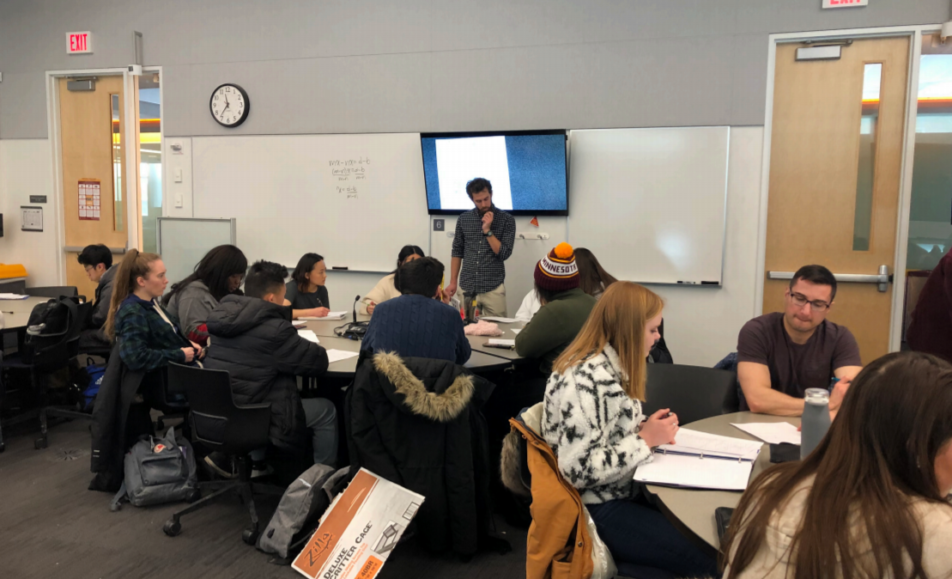
Practicing basic computational skills and developing conceptual understand are two of the many things that happen in the math classroom. Using videos and online homework to ‘flip the classroom’ is a beginning, but more can be done to promote higher order thinking skills. The University of Minnesota is in its sixth year of a redesign of its Pre-Calculus curriculum that ‘flips the formula’. Instead of the professor beginning with the generalization and passing the formula to students who solve specific...

January 11, 2022
The pandemic has left many teaching mathematics in anything but their normal face-to-face classrooms. Some are fully remote, some are hybrid, and some are expected to change their modality of teaching from week to week depending on Covid risks. In this interactive session, participants will explore options for keeping their classes active and engaging for their students, even when their classrooms go virtual.
March 2, 2021
PrairieLearn is a flexible, open-source platform for writing web-based questions that is in broad use for both homework and exams. We will show how PrairieLearn makes it easy to write questions that can randomize themselves, allowing students to practice repeatedly on different variants of a question, and to auto-grade so that students receive immediate feedback. In comparison to other question-asking platforms, PrairieLearn is highly extensible and permits instructors to develop and share new question components using standard languages such as...
February 2, 2021
This presentation will take the form of a brief tour of three parallel threads in recent work updating my freshman-level discrete mathematics course materials: (1) Explicit connections to secondary school content leverage common student experiences, promote communication within the class, and better serve majors pursuing teaching certification. (2) Computer-based interactions (retooled in HTML/JavaScript to be tablet friendly) provide support for an inquiry-based approach to students construct their own understanding of mathematical proof. (3) An extensive MyOpenMath library for discrete mathematics...
January 5, 2021
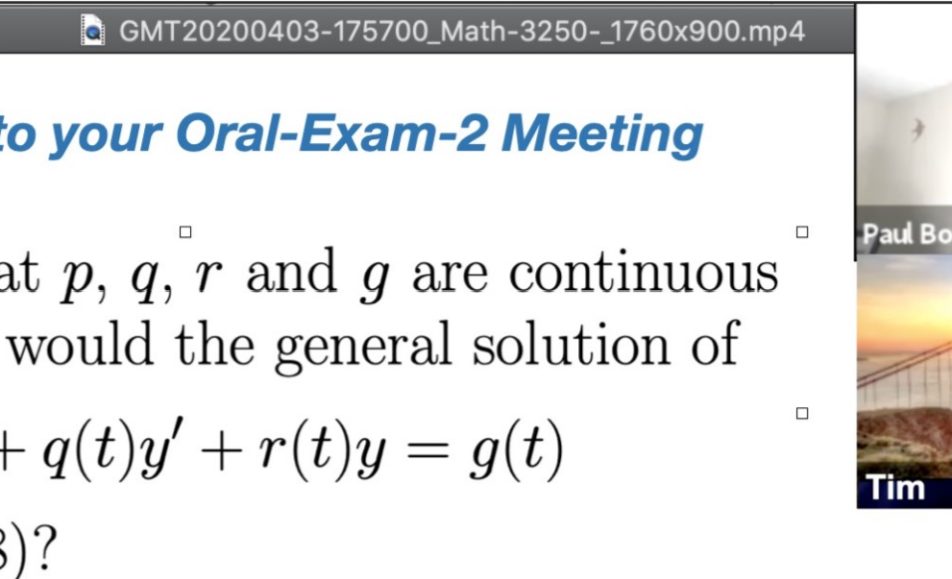
Last spring, with the unexpected move to online instruction and colleagues reporting, “There’s cheating all over the place,” I opted to give oral exams to students in my ODEs and Math-for-Physics classes. Special circumstances (which I’ll describe) provided an opportunity to deliver oral final exams in the two multi-section Calculus-I courses I was coordinating.I’ll discuss the pros and cons of oral exams, making a case that, for an experienced instructor, the pros outweigh the cons, even for classes whose enrollments...

December 15, 2020
Remote teaching in mathematics is better than lots of in-person math teaching. Dr. Andersen has been remote teaching for over a decade. She will be sharing tips and pedagogical techniques for improving your remote teaching skills and conducting active learning in remote sessions with students.

April 7, 2020
Many institutions of higher education have transitioned to online teaching over the past few weeks in response to the novel coronavirus. As a result mathematics faculty are being asked to rapidly translate their courses from brick-and-mortar classrooms to virtual environments. These online modalities require faculty to reassess how they engage students. We faced a similar challenge five years ago when founding the Minerva Schools. In the time since we have taught hundreds of college students math in real-time virtual classrooms....
March 31, 2020
Because of the coronavirus, mathematics faculty are transitioning to teaching online. To help us all deliver the best learning experience, TPSE has drafted a list of the key strategies that every online course should incorporate. We will describe those strategies, and solicit reactions and feedback in the discussion.
March 17, 2020
Many of us are suddenly being asked to conduct the rest of this semesters classes online. How do we make this mode of instruction student-centered? How do we listen to students remotely? How do we poll them? How do we look over their shoulders at the work they are doing? How do we ensure equity in this technological regime? This special meeting of ESME will gather a panel to lead a discussion about these and other questions that many of...
December 3, 2019
At Delft University of Technology the PRogramme Innovation Mathematics Education (PRIME) is dedicated to redesign interfaculty (service) math courses, including Calculus, Linear Algebra, Probability & Statistics and Differential Equations. The goal of the innovation is threefold: to activate the students, to improve transfer from mathematics to engineering, and to improve results. At the moment 24 courses have been redesigned, more than 30 lecturers are involved in teaching and developing the educational material. In total over 3000 students take the courses...
February 8, 2022
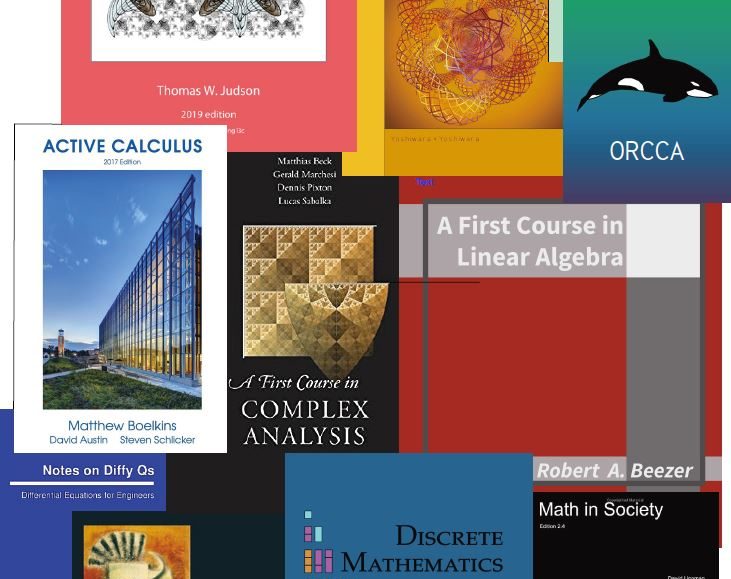
The AIM Open Textbook Initiative began in 2010 as part of the larger UTMOST project (Undergraduate Teaching in Mathematics with Open Software and Textbooks) with a focus on two issues: (1) to make faculty aware of and encourage the use of open access textbooks for traditional undergraduate mathematics courses, and (2) to substantially reduce the time and effort to find and evaluate textbooks. Since then the Editorial Board has identified textbooks that can be recommended for course adoption in almost...
October 10, 2017
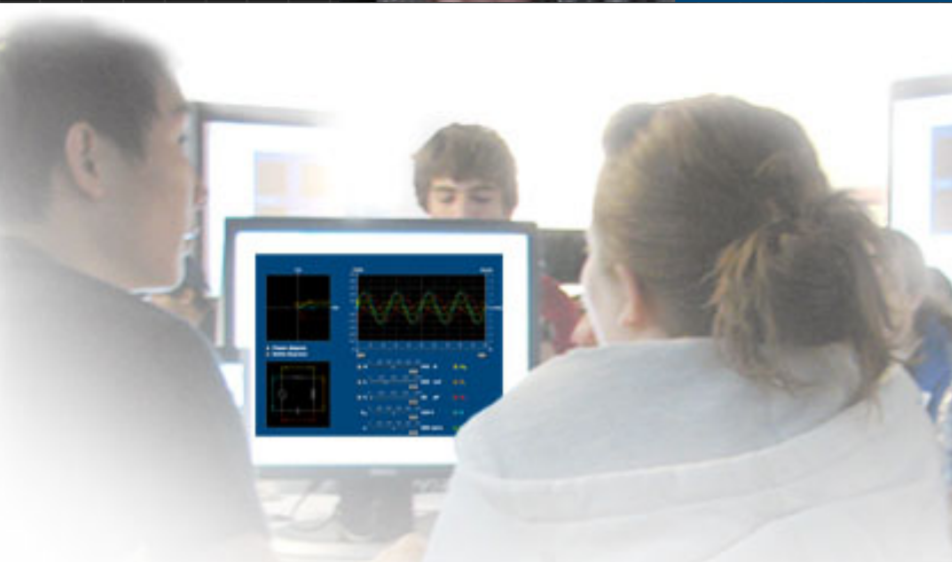
Since about 2002 a team at MIT has been developing a suite of special-purpose applets to support student understanding of mathematical concepts and operations. They have been used extensively as lecture demonstrations and in homework assignments. We will show some examples of these uses, discuss their design and reception, introduce the website mathlets.org, and end with a description of how they have been integrated into online courses.
September 12, 2017
CuratedCourses in Mathematics is a project to create, gather, curate, tag, review, organize and make available high quality online open educational mathematics resources. The project aims to coordinate work being done at multiple institutions on similar courses, enabling faculty to share resources they create or curate from other sources. By creating a system for curating and tagging resources our hope is that faculty can more easily find high quality materials to utilize in their classes and more broadly disseminate good...
March 5, 2024
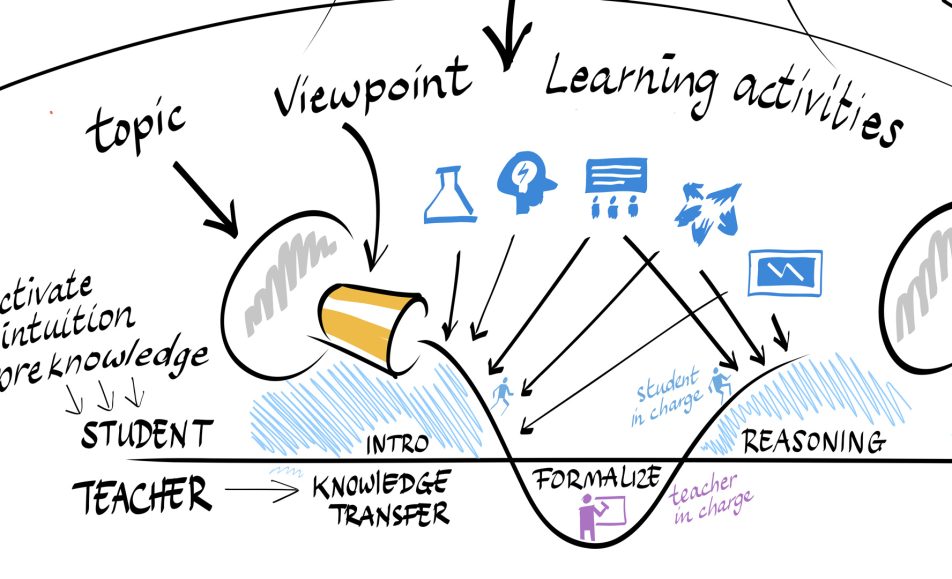
Inductive teaching flips the order of traditional mathematics education. Instead of rigidly introducing concepts and theorems and then considering examples and practice problems to understand them, we start by letting students consider the problems and examples and then encourage them to come up withthe relevant concepts themselves. Inductive teaching can often have a positive effect on the motivation of students to master the content of a mathematics course. In this talk I will describe our attempt to incorporate inductive teaching...
January 24, 2023
Sports analytics is a growing field. How do you get in the game with numbers? What types of questions can be examined? This talk will discuss outlooks that help with successful analytics and a variety of questions that can be analyzed inside and outside the mathematical classroom. From biometric data to box scores to brackets for March Madness, sports applications abound. This talk will discuss the data, analysis and insights available and evolving in sports analytics. Further, it will discuss...
January 19, 2021
In a seminal paper, Nolan and Temple Lang (2010) argued for the fundamental role of computing in the statistics curriculum. In the intervening decade the statistics education community has acknowledged that computational skills are as important to statistics and data science practice as mathematics. There remains a notable gap, however, between our intentions and our actions. To understand that gap, together with Nick Horton, we assembled a collection of papers for a special issue of the Journal of Statistics and...
March 5, 2019
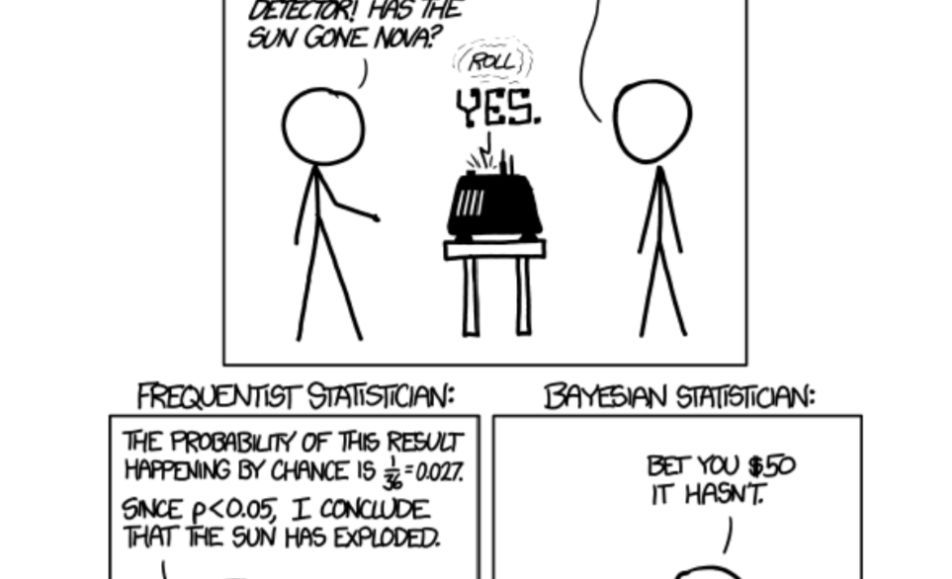
A war is on in probability and statistics: between the objective approach, a.k.a. frequentist or orthodox statistics, and the subjective approach, a.k.a. Bayesian statistics. For my sins, I find myself fascinated by fields where the unorthodox view is correct, so I made and taught an undergraduate course on “Bayesian Inference and Reasoning.” I will illustrate, with many examples, several hopefully transferrable aspects of the course.
September 26, 2017
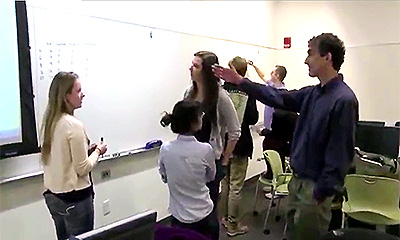
Several years ago at MIT we decided to flip our introductory probability and statistics class. This involved the use of technology both in and out of class as well as a major revamping of the syllabus. We will discuss our experience: what worked well and not so well. At this point we expect many participants will have tried flipping a class, so we hope to generate a discussion of our various experiences.
In this talk, John and Sarah will discuss how fostering student engagement is a central theme of the mathematics curriculum at Olin College of Engineering. From day one, interdisciplinary projects and collaborative teaming experiences help cultivate student ownership in learning. Courses use increasing levels of autonomy in various ways to help keep motivation (and morale!) high. While a major goal of our curriculum is to develop students’ project management skills alongside their quantitative analysis skills, we believe that nurturing an...
November 21, 2023
Dr. Hand has helped develop mathematics projects for a variety of learning environments, including K-12 STEM camps, professional development for K-12 educators, and college classrooms. He will share stories and lessons learned from attempting to build projects that inspire students to pursue STEM. The talk will focus specifically on creating projects that are authentic to students’ lives, permit students to express their unique voice, and give students an appropriate amount of choice. These projects have been delivered in the Tapia...
September 12, 2023
In the preface to his textbook Abstract Algebra, Israel Herstein states that “there is little purpose served in studying some abstract algebra object without seeing some non-trivial consequences of the study.” Sharing this sentiment, I have created a variety of projects to supplement my abstract algebra courses. The projects are designed to build intuition and reveal the relevance of the subject. I will present a sampling of my projects, along with the philosophy behind them, how I implement them, and...
January 24, 2023
Sports analytics is a growing field. How do you get in the game with numbers? What types of questions can be examined? This talk will discuss outlooks that help with successful analytics and a variety of questions that can be analyzed inside and outside the mathematical classroom. From biometric data to box scores to brackets for March Madness, sports applications abound. This talk will discuss the data, analysis and insights available and evolving in sports analytics. Further, it will discuss...
April 28, 2020
Project-based learning can take many forms, from small challenges in a single class to longer assignments. Let’s have a conversation. How do you develop problems that your students find meaningful? How do you handle individual and group aspects of learning? How often do you regroup for a mini-lesson? How do you structure assessment? What are important considerations for distance learning? I look forward to sharing some experience and learning from each other.

September 10, 2019
Undergraduate research is widely understood to fosterpersistence in STEM majors andcareers. Extra-curricular UR programs are difficult to organize and sustain, and may not be available to a relevant segment of the student population. We will report on two independently designed course-based undergraduate research experiences, and discuss what we have learned about running such a course.

March 6, 2018
The Illinois Geometry Lab (IGL) was founded in 2011 to promote undergraduate research and community outreach in the Department of Mathematics at the University of Illinois. From modest origins, the IGL has grown substantially: Spring 2018 witnesses nineteen IGL-sponsored research projects involving over 80 undergraduates and 23 graduate students. The IGL has also quickly become the premier departmental organization focusing on engagement with and outreach to community organizations and schools. I will discuss the IGL’s history and modus operandi, and...

December 6, 2022
At the end of August 2021, I began a one year visiting term at the National Museum of Mathematics (MoMath) in New York City. The visiting position, known as the “Distinguished Visiting Professor for the Public Dissemination of Mathematics,” was made possible by a gift from the Simons Foundation. In this talk I’ll tell some stories about what the experience was like for me, what I tried to do, and what seemed to work and what did not.
September 23, 2025
Fifteen years ago, math majors told my colleague Jeff Humpherys and me, “We majored in math because we like it, but we know it won’t get us a job unless we want to teach.” This inspired us to create the applied and computational mathematics (ACME) program at BYU, which combines deep, beautiful mathematics with practical skills in demand by employers. Since launching twelve years ago, our number of majors has nearly doubled, with ACME students now making up two-thirds of...
April 29, 2025
Project EMBER is a national initiative that aims to ensure every higher education math student succeeds in introductory mathematics aligned with their interests – starting at the research institutions that influence all other sectors of the higher education system. Project EMBER seeks to remove mathematics as a barrier for students by empowering Teaching Focused Faculty and equipping them with the tools and resources needed to implement research-backed innovations at scale across a robust network of vertically-integrated teams of teaching-focused faculty,...
In 2014, Teaching TRIOS at Middle Tennessee State University introduced an innovative peer observation model for STEM educators. TRIOS, based on being Time-sensitive, Reciprocal, Inclusive, Operative, and Strength-Based, transforms observation from evaluative to reflective, focusing on faculty strengths to drive change. In this OLSUME talk, I’ll discuss a decade’s worth of lessons from practice, theory, and empirical research. Practically, I’ll detail structuring TRIOS groups in STEM departments, offering guidance for adopting this strategy. Theoretically, I’ll discuss our NSF-funded ACT-STEM project,...
In this talk, John and Sarah will discuss how fostering student engagement is a central theme of the mathematics curriculum at Olin College of Engineering. From day one, interdisciplinary projects and collaborative teaming experiences help cultivate student ownership in learning. Courses use increasing levels of autonomy in various ways to help keep motivation (and morale!) high. While a major goal of our curriculum is to develop students’ project management skills alongside their quantitative analysis skills, we believe that nurturing an...
April 2, 2024
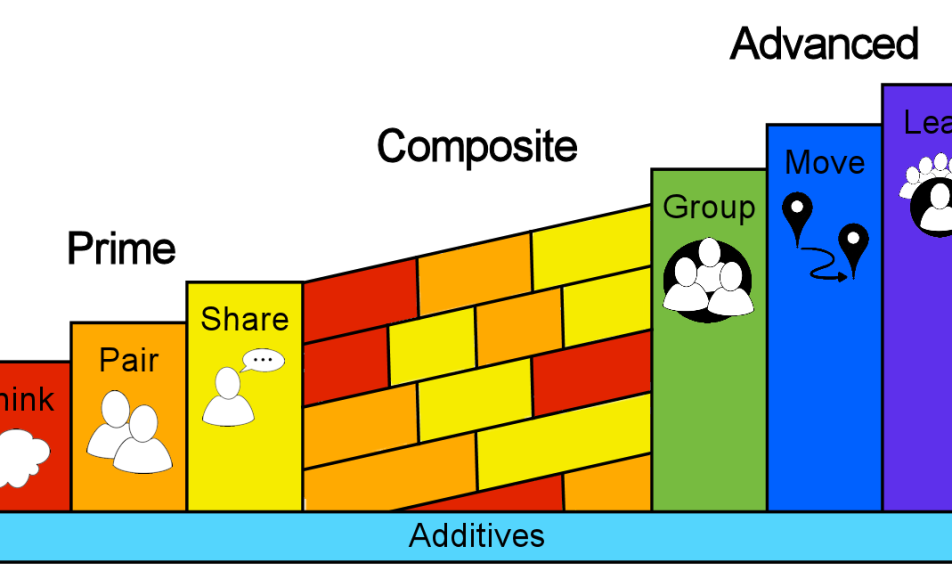
Mathematics organizations have called for more active learning in college mathematics classrooms. But exactly how can faculty get started with active learning? What should faculty do to try again if first attempts are unsuccessful? How can faculty build a toolkit of techniques? How can we use active learning in ways that improve equity? Even when strategies work well, how do we build student (and colleague) trust? In this seminar we introduce the Active Learning Pedagogy Sequence (ALPS) as a tool...
October 11, 2022
Embodied cognition is a philosophy that claims that learning is body-based. One might ask how that has anything to do with teaching and learning mathematics. In this talk, I will illustrate ways in which this lens can facilitate learning especially for students whose second language is English. I argue that most faculty probably already adopt aspects of embodied cognition into their courses and my hope is to help make faculty more aware of how they do this. Please bring your...
November 23, 2021
Most underrepresented minority students in community colleges (CCs) do not take full advantage of great REU opportunities. Socio-economic status and life hardships these students go through while getting their education is a big part of the problem – many of them work fulltime jobs while attending school, support children or other family members, and cannot give up employment or drop other responsibilities for a prolonged period (6-8 weeks) to solely participate in an REU. Additionally, CC faculty’s primary focus and...

September 24, 2019
Instructors using active learning strategies should inform and coach their students about the benefits of active learning, how to be an effective student in an active classroom, and learning additional ways (for students) of perceiving progress and success in a class. Student buy-in is an area of focus necessary in classes using active learning methods, because the norms and roles in these classes are different. Teaching is a cultural activity, and changing norms requires discussion and transparency. In this seminar,...
November 3, 2018
In an ideal world, when a student asks for help with a math problem, we do not answer directly. We help them realize what is confusing them and we help them solve the problem by themselves. From the perspective of a beginning instructor (or TA), this is easier said than done. How do you do it exactly? What if the student does not cooperate? What if they just answer “I do not know” to anything we ask? What if they...

February 6, 2018
We discuss a dozen years of experience in course development with an aim of changing students’ perceptions of what mathematics is and what success in mathematics classes ought to entail. Key components are identifying important common student misunderstandings and designing activities, often in-class, to address those, and aiming for authenticity of student practice. We share ground-up (re)design of three courses: introduction to proofs, math for preservice elementary school teachers, and mathematical modeling in preparation for college algebra, the latter of...
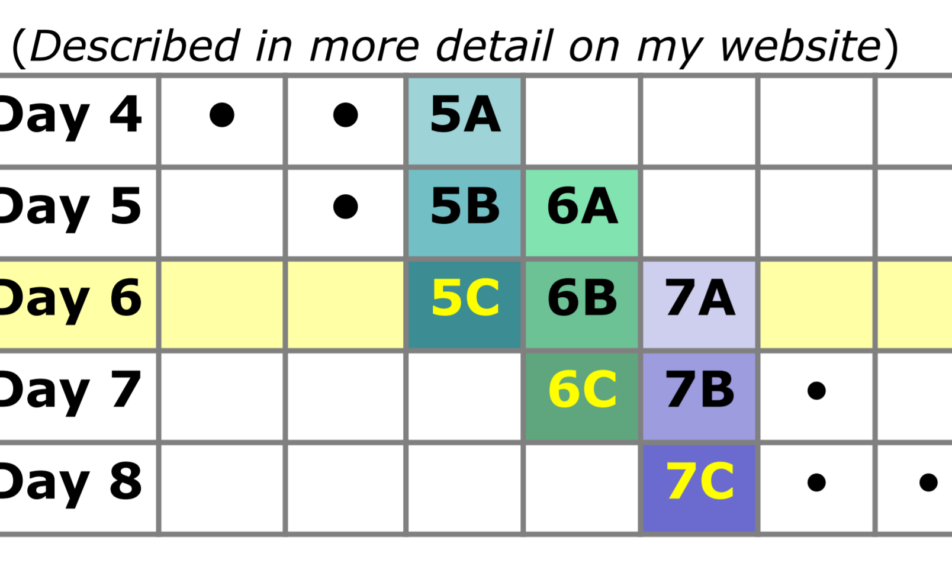
October 24, 2017
What is active learning? What is the scientific evidence about it in the classroom? What is the lecture-textbook trap? What are the alternatives, and how difficult are they? What about issues such as “first contact”, and linkages between before-, during-, and after-class. Is there a motto about student reading? What are the rewards of active learning for both teachers and students? How much inertia is there? I will address these questions based on pedagogy developed in 17 distinct university courses...

November 10, 2020
How can we help our students make an informed choice about pursuing a life in mathematics or in a mathematics-intensive profession? How can we practically and productively assess the impact of our introductory courses on our students’ academic and career choices? Erica and Uri will share some of their recent work on acculturating students to the norms, values and aesthetics of our discipline. They will describe some of the novel structures, routines and rituals which constitute the heart of their...

January 27, 2026
All students who are enrolled in college courses have the ability to succeed. However, most undergraduate mathematics students do not have effective learning strategies, and they resort to memorizing formulas and solutions to specific problems just before tests. Additionally most view homework as a task to complete and submit, not as a learning tool. This interactive webinar will introduce faculty to cognitive science research- based learning strategies that will help all students experience meaningful, transferable learning. The session will focus...
September 23, 2025
Fifteen years ago, math majors told my colleague Jeff Humpherys and me, “We majored in math because we like it, but we know it won’t get us a job unless we want to teach.” This inspired us to create the applied and computational mathematics (ACME) program at BYU, which combines deep, beautiful mathematics with practical skills in demand by employers. Since launching twelve years ago, our number of majors has nearly doubled, with ACME students now making up two-thirds of...
February 22, 2022
Join us to hear from a panel consisting of the directors of several study abroad providers whose programs are specifically designed for Mathematics and STEM majors with rigorous academic coursework, all taught in English.The discussion will offer information about each program’s academics, location and new developments and adjustments made during the pandemic, and lastly, a brief overview of the benefits for opting to study abroad as STEM-based majors.
October 25, 2022
Although education research has many implications for improving student outcomes in mathematics, more work is needed to successfully and sustainably translate research findings into practice. This interactive presentation will focus on what we know as a field about effective and efficient ways to improve student outcomes in mathematics, and what that could or should mean for mathematics departments. Improving student outcomes sustainably involves not just making individual, isolated changes, but whole departments investing in addressing complex systems. This presentation will...
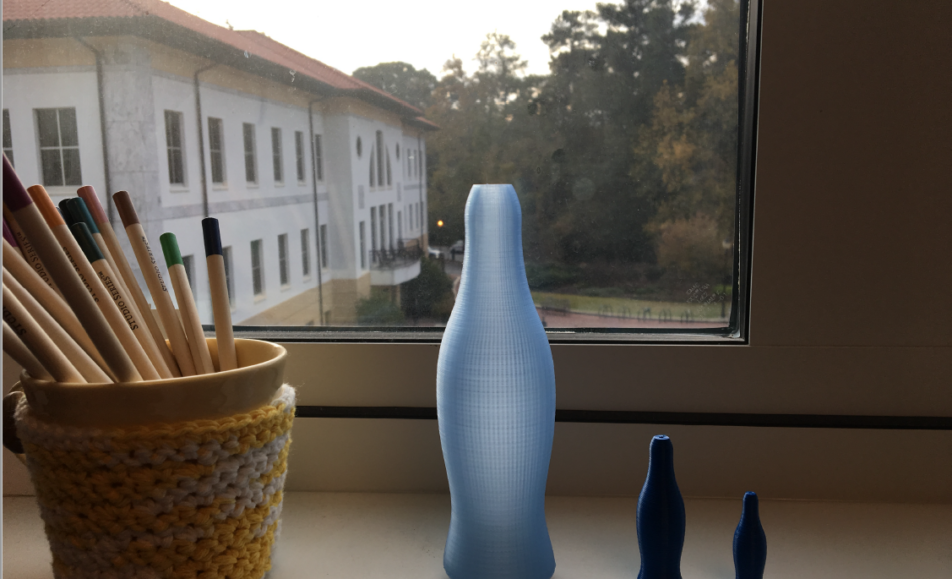
November 5, 2019
Sustainability challenges faculty and students to find solutions that meet the needs of the present without compromising the ability of future generations to meet theirs. Infusing sustainability issues in the classroom equips students with the skills and knowledge they need to use mathematics to conduct conscientious modeling and mindful analysis by considering economic, environmental, and social outcomes. This talk will present a variety of ways to incorporate sustainability into the undergraduate mathematics curriculum and discuss the benefits and challenges of...
April 29, 2025
Project EMBER is a national initiative that aims to ensure every higher education math student succeeds in introductory mathematics aligned with their interests – starting at the research institutions that influence all other sectors of the higher education system. Project EMBER seeks to remove mathematics as a barrier for students by empowering Teaching Focused Faculty and equipping them with the tools and resources needed to implement research-backed innovations at scale across a robust network of vertically-integrated teams of teaching-focused faculty,...

October 16, 2018
It has been said that university faculty are perhaps the most highly qualified profession but with essentially no training for (the teaching part of) the job they are hired to do. This seminar will discuss our effort to change that, by including formal training in teaching for our Teaching Assistants – the future professoriate. The idea was born out of the merger of Clarkson with what is now our Capital Region Campus, formerly Union Graduate College, in Schenectady, NY. The...
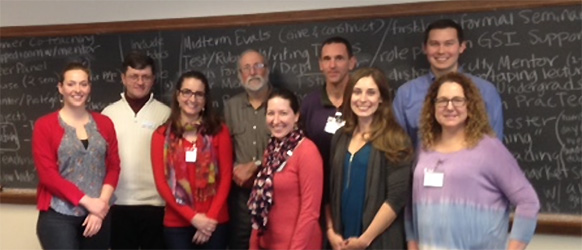
December 19, 2017
Part of providing a valuable classroom experience for undergraduate students is supporting teachers so that they are well equipped to deliver high quality instruction. Graduate students at research universities often serve as teaching assistants (GTAs) and many serve as instructors of record in undergraduate courses. We will profile two well established graduate student professional development support programs, one at Harvard University and the other at Duke University. Then we will talk about the College Mathematics Instructor Development Source (CoMInDS) project...
April 29, 2025
Project EMBER is a national initiative that aims to ensure every higher education math student succeeds in introductory mathematics aligned with their interests – starting at the research institutions that influence all other sectors of the higher education system. Project EMBER seeks to remove mathematics as a barrier for students by empowering Teaching Focused Faculty and equipping them with the tools and resources needed to implement research-backed innovations at scale across a robust network of vertically-integrated teams of teaching-focused faculty,...
April 15, 2025
Linear Algebra is often an obstacle for students whose only prior experience is with calculus. I discuss a textbook I’m writing that takes a very different approach from existing textbooks. The target audience is ordinary students, not honors students. A key organizing principle is for the course to have a narrative arc, with near term and longer-term goals pointing the way forward at each stage. The arc for the first part of the course focuses on diagonalization, first for the...
In 2014, Teaching TRIOS at Middle Tennessee State University introduced an innovative peer observation model for STEM educators. TRIOS, based on being Time-sensitive, Reciprocal, Inclusive, Operative, and Strength-Based, transforms observation from evaluative to reflective, focusing on faculty strengths to drive change. In this OLSUME talk, I’ll discuss a decade’s worth of lessons from practice, theory, and empirical research. Practically, I’ll detail structuring TRIOS groups in STEM departments, offering guidance for adopting this strategy. Theoretically, I’ll discuss our NSF-funded ACT-STEM project,...
February 18, 2025
How do we approach students who do not see mathematics as useful? Those who are afraid of it? This talk will describe how we can engage them in quantitative thinking by “teaching backward”. Using examples, I will show how starting with stories, we can often get students to grab onto mathematics. They may surprise themselves by how far they get.
In this talk, John and Sarah will discuss how fostering student engagement is a central theme of the mathematics curriculum at Olin College of Engineering. From day one, interdisciplinary projects and collaborative teaming experiences help cultivate student ownership in learning. Courses use increasing levels of autonomy in various ways to help keep motivation (and morale!) high. While a major goal of our curriculum is to develop students’ project management skills alongside their quantitative analysis skills, we believe that nurturing an...

November 19, 2024
Large courses are a challenge to teach for a variety of reasons, especially when incorporating active learning. In this talk, I take a philosophical approach informed by the notion of embracing and seeking opportunity in imperfect situations, without minimizing or discounting the real challenges instructors grapple with. While this talk will not focus on specific practical and readily implementable techniques, the hope is that attendees might find it useful to apply a Wabi Sabi lens in order to identify opportunities...
September 10, 2024
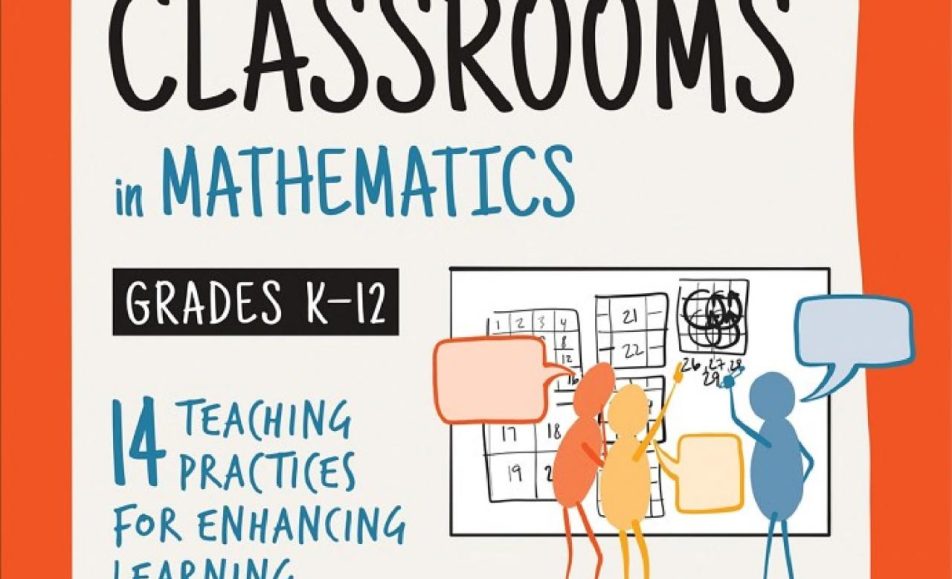
Peter Liljedahl’s book Building Thinking Classrooms provides a roadmap for teachers to “get more students thinking, thinking more, thinking longer.” In this OLSUME seminar, Peter Liljedahl will outline the principles of his book and dive into several of the 14 teaching practices that research shows optimize conditions for students to think, which increases their engagement and learning. Building Thinking Classrooms has a large K-12 audience, but the ambitious goals and research-based strategies can also help frame instruction for math educators...
April 2, 2024
Mathematics organizations have called for more active learning in college mathematics classrooms. But exactly how can faculty get started with active learning? What should faculty do to try again if first attempts are unsuccessful? How can faculty build a toolkit of techniques? How can we use active learning in ways that improve equity? Even when strategies work well, how do we build student (and colleague) trust? In this seminar we introduce the Active Learning Pedagogy Sequence (ALPS) as a tool...
November 7, 2023
We discuss some initiatives at Rutgers math department that aim to bring active learning into higherlevel proof-based math courses. One such established program is active learning in our Intro Math Reasoning course, in collaboration with the Rutgers Learning Centers. Another recent initiative is an NSF funded grant to explore the possibilities of introducing active learning into 300 level proof based Linear Algebra.
September 26, 2023
There is a large body of research on the importance of explicitly teaching students about evidence-driven strategies for effective learning. Incorporating instructional strategies grounded in cognitive science can enable educators and learners to prosper in their academic goals. As educators, specifically during an era of pandemic-induced learning loss and the loss of motivation and interest in higher education, we strive to explore novel methods to transform our teaching practices. To reduce the gap between research on learning and the practice...
April 3, 2018
In 1997, Virginia Tech dramatically changed how they taught lower division mathematics courses. They abandoned lectures and created a 500 seat “Mathematics Emporium” computer lab where students learned calculus and linear algebra assisted by software together with individualized input from teams of graduate students. Success rates soared and instructional costs plummeted. Other institutions soon adapted this model to their own needs with similar success. Emporiums, large and small, sprouted all over the country. They became popular for teaching remedial mathematics,...
October 8, 2024
It has been shown that attending peer tutoring is correlated to improved outcomes for undergraduate mathematics students. This talk will explore results from our research on tutoring interactions. Although undergraduate peer tutors don’t behave like expert instructors, their contributions to student learning are unique and benefit students. Our research exposes some opportunities for tutor training that meets the tutors where they are and leverages their natural tendencies. I will also discuss some of my recent work regarding the role of...
November 23, 2021
Most underrepresented minority students in community colleges (CCs) do not take full advantage of great REU opportunities. Socio-economic status and life hardships these students go through while getting their education is a big part of the problem – many of them work fulltime jobs while attending school, support children or other family members, and cannot give up employment or drop other responsibilities for a prolonged period (6-8 weeks) to solely participate in an REU. Additionally, CC faculty’s primary focus and...

October 12, 2021
Research experiences in mathematics have become ubiquitous in undergraduate education. However, they have also become extremely competitive and often inaccessible to those who may most benefit from the experience. In this talk, I provide ways in which faculty can incorporate research opportunities into their undergraduate courses through collaborative teamwork. I will also give advice on how to create open questions and how to evaluate and provide feedback on students’ written work. The goal is for faculty to leave with some...